What Should Be on Your Fishing Gear Checklist for Each Trip Type?
Key Takeaway: A fishing gear checklist should change with how you reach the water. Shore fishing is limited by what you can carry on foot, kayak fishing by deck space and the fact that everything can get wet or go overboard, and boat fishing by legal safety requirements — the U.S. Coast Guard requires a wearable life jacket for every person on board, plus additional equipment as the boat gets bigger. Build one core list every angler needs, then add the trip-specific items on top. That approach prevents the two classic mistakes: forgetting the one thing you needed, and hauling a boat’s worth of tackle down a riverbank.
What Belongs on Every Fishing Checklist?
Every fishing trip, regardless of type, needs the same core: a valid license, a rod and reel matched to your target species, basic terminal tackle, tools to handle fish safely, and sun and weather protection. Start here, then layer on the shore, kayak, or boat items below.
The U.S. Fish and Wildlife Service’s 2022 National Survey counted 39.9 million anglers aged 16 and older — the highest participation since at least 1991. Plenty of them still get to the water without the one item that makes the trip work. The core list is what prevents that.
License and regulations
- Current state fishing license (and any required stamps or endorsements)
- A copy of local regulations for size limits, creel limits, and closed seasons
- Your license saved on your phone and on paper, in case you lose signal or battery
Rods, reels, and line
- Rod and reel combo rated for your target species
- Spare spool or pre-rigged backup rod if you have one
- Extra line in the right test weight
Terminal tackle
- Hooks in two or three sizes
- Sinkers or weights
- Bobbers or floats
- Swivels and leaders
- A small, focused lure selection for the species you’re after
Tools and fish handling
- Needle-nose pliers or a hook remover
- Line cutters or braid scissors
- Landing net, if the species calls for one
- Measuring tape or bump board to check size limits
- Stringer, fish basket, or cooler if you plan to keep fish
Personal gear
- Polarized sunglasses — they cut glare and protect your eyes from flying hooks
- Sunscreen, SPF 30 or higher and water-resistant, per the American Academy of Dermatology
- Hat and a light long-sleeve layer
- Water and snacks
- A small first aid kit with bandages and antiseptic for hook injuries
What Should Be on a Shore Fishing Checklist?
A shore fishing checklist should be built around what you can comfortably carry, since you may walk a long way from the parking area to the best water. The goal is a compact, mobile setup — you can always come back for more, but hauling too much down a riverbank or across rocks wears you out and keeps you from moving to new spots.
Carry and storage
- A tackle bag, sling pack, or backpack instead of a hard-sided tackle box
- One or two rods at most — a rod holder or sand spike if you plan to still-fish
- A folding stool or lightweight chair for long sessions
Footing and conditions
- Footwear with good grip for wet rocks, docks, or muddy banks
- Waders or wading boots if you’ll be in the water
- Insect repellent for dawn and dusk
Shore-specific tackle
- Heavier sinkers for surf or current
- Longer rod for casting distance from the bank or surf
- Bait container or bucket, if you’re using live bait
The most common shore fishing mistake is packing your whole tackle collection. Bring lures and rigs for the specific species and water you’re fishing that day — not everything you own.
What Should Be on a Kayak Fishing Checklist?
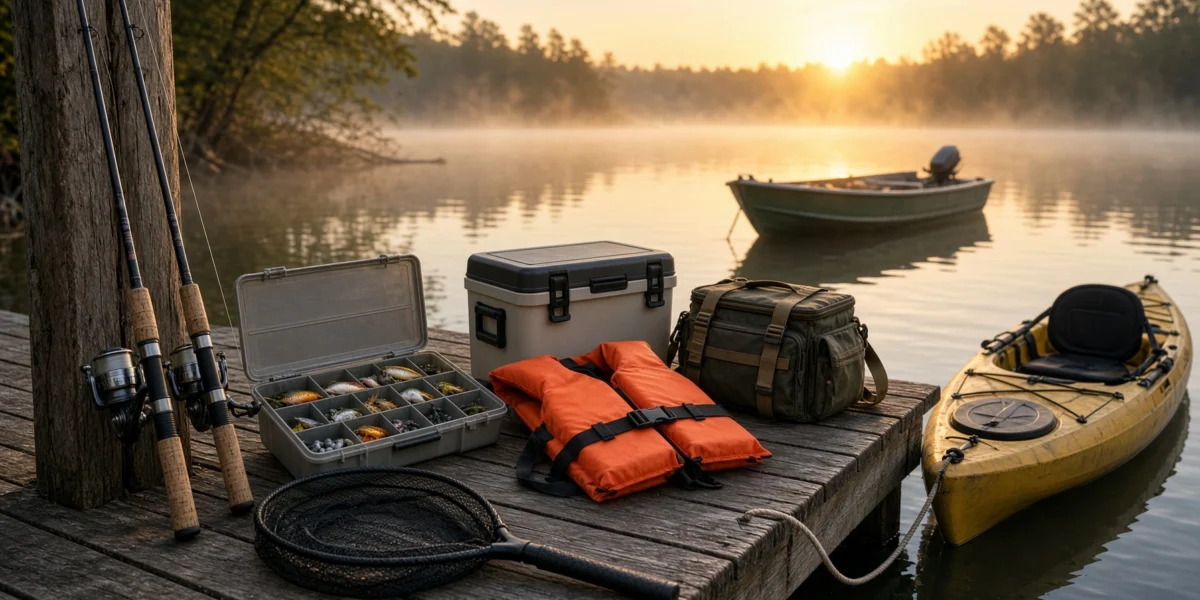
A kayak fishing checklist starts with safety and assumes everything can get wet, flip, or sink. You’re sitting close to the water in a small craft, often by yourself, so what you pack has to be secured, waterproof, and within reach without standing up.
Safety (non-negotiable)
- A U.S. Coast Guard–approved life jacket that you actually wear — the Coast Guard’s 2024 boating statistics found drowning caused about three-quarters of boating deaths, and 87% of drowning victims weren’t wearing one
- A whistle attached to your life jacket
- A bright flag or light so other boaters can see you
- A dry bag with a phone, a spare layer, and your first aid kit
- A float plan: tell someone where you’re launching and when you expect to be back
Securing your gear
- Paddle leash and rod leashes
- Rod holders mounted within reach
- A kayak crate or tank well bag to keep tackle organized and strapped down
- A compact tackle tray instead of a full tackle box
Kayak-specific extras
- Anchor trolley or stake-out pole to hold position
- Bilge pump or sponge
- Lip grip for landing fish without a bulky net
- Dress for the water temperature, not just the air temperature
Keep your kayak kit lean. Every extra box takes up deck space you need for fighting and landing fish, and anything you haven’t strapped down is one wave away from the bottom of the lake.
What Should Be on a Boat Fishing Checklist?
A boat fishing checklist has to cover legally required safety equipment first, then fishing gear. The U.S. Coast Guard sets minimum requirements for recreational vessels, and your state may add more. A boat also gives you room to bring more tackle — which makes organization, not space, the main challenge.
Coast Guard–required safety equipment
- One wearable, Coast Guard–approved life jacket for every person on board
- A throwable flotation device (Type IV) on boats 16 feet and longer
- A sound-producing device, such as a horn or whistle, on boats under 39.4 feet
- Visual distress signals if you’re on coastal waters or the Great Lakes in a boat longer than 16 feet
- A fire extinguisher on most motorized boats
- Navigation lights if you’ll be out between sunset and sunrise
- Current boat registration and your boater education card, where your state requires one
Boat operation
- Fuel checked and topped off
- Drain plug installed before launch
- Anchor and enough line for the water depth
- Dock lines and fenders
- Charged batteries for the trolling motor and electronics
Boat fishing tackle
- Multiple rods rigged for different techniques
- A full tackle box or organized tackle trays
- Live well or aerated bait bucket
- Landing net
- Fish finder or GPS, if you use one
- Cooler with ice for the catch and for drinks
Comfort and weather
- Rain gear, even on a sunny forecast
- A towel and a dry change of clothes
- Extra water — plan for more than you’d bring on shore, since there’s no shade on open water
Boat checklists often fail on organization rather than space. When every tackle tray lives on the boat, it’s easy to forget what’s in them, and even easier to buy the same lure again. If you boat and fish, keep the boat’s tackle list separate from what’s in your garage.
How Do Your Gear Priorities Change by Trip Type?
The difference between the three trip types comes down to what limits you. Shore anglers are limited by what they can carry, kayak anglers by deck space and exposure to the water, and boat anglers by legal requirements and keeping more gear organized.
| Priority | Shore | Kayak | Boat |
|---|---|---|---|
| Main limit | What you can carry | Deck space and staying dry | Required safety gear and organization |
| Tackle amount | Minimal, species-specific | Minimal, strapped down | Full selection |
| Life jacket | Recommended near deep or fast water | Worn at all times | One per person, required |
| Storage style | Sling pack or backpack | Crate, dry bags, leashes | Tackle trays, boat compartments |
| Biggest risk | Overpacking | Losing gear overboard | Missing required equipment |
| Safety extras | Good footwear | Float plan, visibility flag | Throwable device, horn, distress signals |
If you fish more than one way, you’ll end up with overlapping kits. That’s where most anglers lose track — a favorite lure lives in the kayak crate, the backup pliers are on the boat, and the shore bag is missing both.
What Are the Most Common Fishing Checklist Mistakes?
The most common mistake is using one fishing checklist for every trip. A boat list carried down a riverbank means overpacking, and a shore list taken onto a boat can mean missing required safety equipment.
The second mistake is forgetting where gear actually lives. Anglers who fish from shore, a kayak, and a boat usually split tackle across several bags and boxes. Without a record of what’s in each one, it’s easy to leave the right lure at home or buy a duplicate. Our guide to organizing your fishing tackle covers practical storage systems for that.
The third mistake is skipping a post-trip reset. Rinse reels after saltwater trips, dry soft tackle bags before storing them, and restock hooks, line, and terminal tackle when you get home — not the morning of your next trip.
Frequently Asked Questions
What do I need to go fishing for the first time? Start with a fishing license, a rod and reel combo suited to local species, hooks, sinkers, bobbers, and live bait or a few simple lures. Add pliers, line cutters, sunscreen, polarized sunglasses, water, and a small first aid kit. Beginners usually do best fishing from shore, where the gear list is shortest.
Do I need a fishing license for every trip? In most cases, yes. Each state sets its own licensing rules, and most require a license for adult anglers in both freshwater and saltwater. Some states offer free fishing days or exempt certain groups. Check your state wildlife agency’s website before every season, since rules and fees change.
Do I need to wear a life jacket while kayak fishing? You should, and many states require one on board. U.S. Coast Guard data for 2024 shows drowning caused about three-quarters of boating deaths, and 87% of drowning victims were not wearing a life jacket. On a kayak, a fall into the water can happen quickly, so wear it rather than stowing it.
What safety equipment is required on a fishing boat? The Coast Guard requires a wearable life jacket for each person, a throwable device on boats 16 feet and longer, and a sound-producing device on boats under 39.4 feet. Visual distress signals are required on coastal waters and the Great Lakes for boats longer than 16 feet. Most motorized boats also need a fire extinguisher.
How much tackle should I bring on a shore fishing trip? Bring only what you need for the species and water you’re fishing that day. A small selection of lures, a few hook sizes, sinkers, and a backup leader fits in a sling pack. Packing light makes it easier to move between spots, which usually catches more fish than carrying a bigger tackle box.
How do I keep track of fishing gear stored in different places? Keep a separate list for each location — your garage, boat, kayak crate, and shore bag — and update it after every trip. A written list works, but an inventory app with photos makes it easier to see what’s in each kit and avoid buying duplicates of gear you already own.
What should I do with my fishing gear after a trip? Rinse reels and lures with fresh water after saltwater trips, dry bags and waders before storing them, and check line for nicks or wear. Restock anything you used up — hooks, sinkers, leaders, and bait — so your checklist is already done before the next trip.
Getting Organized Before You Go
The checklists above work best as a starting point you adjust to your own water, target species, and way of fishing. Once you’ve settled on your lists, ZeroMyGear’s Kit Builder lets you save your shore, kayak, and boat setups as separate kits, so you can check each one off before you leave. Kits are included on the free plan.
For anglers who want more, Fishing Coach — available on ZeroMyGear’s Professional plan — adds catch rate analysis, seasonal tackle tips, and reel maintenance reminders based on how you actually fish. You can explore it on the fishing gear page.
Whether you fish once a season or every weekend, knowing what’s in each bag, box, and boat compartment means less time searching and fewer duplicate purchases. Start Free and build your first fishing kit today.
Sources
- U.S. Fish and Wildlife Service, 2022 National Survey of Fishing, Hunting, and Wildlife-Associated Recreation — 39.9 million anglers aged 16+: https://www.fws.gov/program/national-survey-fishing-hunting-and-wildlife-associated-recreation-fhwar
- U.S. Coast Guard, 2024 Recreational Boating Statistics — drowning share of deaths and life jacket use (as reported by the National Safe Boating Council): https://www.safeboatingcouncil.org/resources/recreational-boating-facts/
- U.S. Coast Guard minimum equipment requirements for recreational vessels (summarized by BoatUS Foundation): https://boatus.org/boating-safety/uscg-equipment-requirements/
- American Academy of Dermatology — sunscreen guidance (SPF 30+, water-resistant): https://www.aad.org/public/everyday-care/sun-protection/shade-clothing-sunscreen/how-to-select-sunscreen