Every angler knows the frustration: You’re on the water, fish are hitting topwater, and you KNOW you have that perfect popper somewhere. Ten minutes later, you’ve torn through three tackle boxes and still can’t find it. By the time you do, the bite is over.
Disorganized tackle doesn’t just waste time—it costs you fish. Here’s how to build a tackle organization system that puts the right lure in your hand in seconds.
The True Cost of Tackle Chaos
- Missed opportunities: Fish don’t wait while you search
- Duplicate purchases: Buying lures you already own but can’t find
- Damaged gear: Tangled lines, rusted hooks, crushed soft plastics
- Wasted fishing time: Average angler spends 15+ minutes per trip searching
- Forgotten inventory: That expensive swimbait buried in the garage
Sound Familiar? “I bought a $15 crankbait because I couldn’t find mine. Found three of them when I cleaned out my garage. Three.” — Every angler, probably
Tackle Organization Principles
Before diving into specific systems, understand the principles that make organization work:
1. Categorize by Function, Not Brand
Don’t organize by manufacturer. Organize by how you’ll USE the tackle:
- Topwater lures together
- Crankbaits by diving depth
- Soft plastics by style (worms, creatures, swimbaits)
- Terminal tackle by size
2. Frequency Dictates Accessibility
Your go-to lures should be easiest to reach. Seasonal or specialty items can be stored deeper.
3. Visibility Matters
If you can’t see it, you’ll forget you have it. Clear boxes, organized trays, and good lighting save time.
4. One Home Per Item
Every lure needs a designated spot. After use, it returns to that exact spot. No exceptions.
Physical Tackle Organization Systems
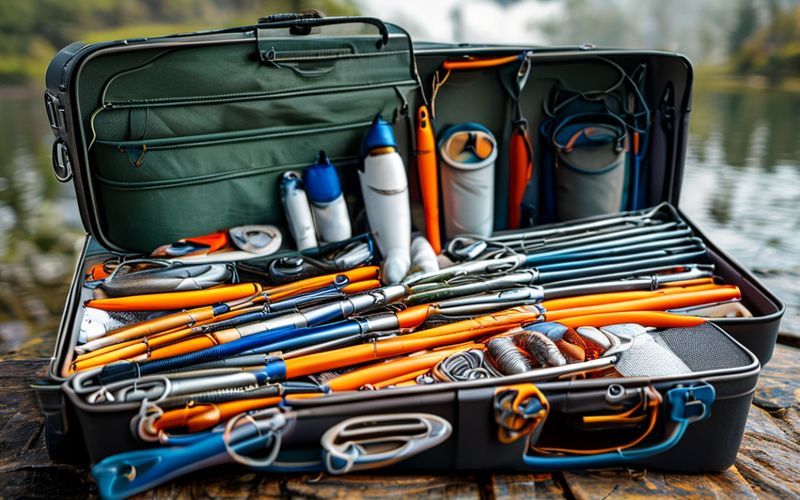
The Multi-Box System
Use separate tackle boxes/bags for different applications:
- Box 1: Topwater and surface lures
- Box 2: Crankbaits and jerkbaits
- Box 3: Soft plastics and jigheads
- Box 4: Terminal tackle (hooks, weights, swivels)
- Box 5: Species-specific (bass, trout, saltwater)
The “Day Bag” Approach
Maintain a master inventory at home, but pack a streamlined “day bag” for each trip:
- Check conditions and target species before the trip
- Select 15-20 lures most likely to produce
- Pack in a small, organized bag
- Return everything to master storage after trip
Soft Plastic Storage Solutions
Soft plastics need special attention:
- Keep in original bags when possible (preserves scent/oil)
- Separate by color—some plastics will “bleed” onto others
- Use Plano-style boxes with adjustable dividers
- Store flat to prevent curling and deformation
Digital Tackle Inventory: The Game Changer
Physical organization handles the “where”—digital inventory handles the “what.”
A digital tackle inventory lets you:
- Know exactly what you own before buying more
- Track which lures produce fish (and which don’t)
- Remember where specialty items are stored
- Plan trips based on available tackle
- Calculate total tackle investment (for insurance)
What to Track for Each Lure
- Type/category (crankbait, spinnerbait, etc.)
- Brand and model
- Color pattern
- Size/weight
- Diving depth (for crankbaits)
- Storage location
- Condition
- Performance notes (optional but valuable)
Track Your Tackle, Catch More Fish
ZeroMyGear’s fishing category lets you catalog every lure, rod, and reel. Search your inventory on the water. Know what’s working and what’s wasting space.
Rod and Reel Organization
Don’t forget about the big stuff:
- Vertical rod storage: Ceiling-mounted racks or corner stands
- Horizontal storage: Wall-mounted holders for garages
- Travel cases: Hard cases for transport, labeled by rod type
- Reel maintenance logs: Track cleaning, line changes, repairs
Seasonal Tackle Rotation
Organize seasonally to match fish behavior:
- Spring: Jerkbaits, suspending lures, spawn-related tackle forward
- Summer: Topwater, deep-diving cranks, offshore tackle ready
- Fall: Reaction baits, lipless cranks, shad patterns accessible
- Winter: Finesse gear, blade baits, slow-presentation lures
The 30-Minute Tackle Audit
Once per season, spend 30 minutes on maintenance:
- Pull everything out of storage
- Check hooks for rust and sharpness
- Replace damaged split rings
- Reorganize items that migrated to wrong spots
- Update digital inventory with new purchases
- Note items to replace or replenish
Tackle Organization Checklist
- Tackle categorized by function/type
- Frequently used items easily accessible
- Soft plastics properly stored (flat, separated)
- Digital inventory created or updated
- Storage locations labeled
- Day bag system established
- Rods stored vertically or wall-mounted
- Seasonal rotation system in place
The Bottom Line
Time spent organizing tackle is time that pays dividends on the water. When fish are biting, the angler who finds the right lure first catches the most fish. Period.
Start with one category. Build your system over time. Your future fishing trips—and your wallet—will thank you.