At some point in the last few years, you probably opened a storage tote — the one that lives in the back corner of the garage — and spent twenty minutes trying to figure out if the doe call inside was the one that works or the one you keep meaning to throw away. Then you found three headlamps, none of which had batteries, and a grunt tube you forgot you owned.
That is not a gear problem. That is an information problem.
Hunting gear accumulates the same way fishing tackle does — slowly, then all at once, across a decade of seasons, sales, and “I’ll remember where I put that” moments. By the time you’re running a lease and splitting days between archery and rifle season, you’ve got thousands of dollars of equipment spread across a truck bed, a blind bag, a base camp tote, and a closet that your spouse has requested you do something about.
A real hunting gear inventory doesn’t mean cataloging every blaze orange cap. It means knowing what you have, what condition it’s in, when it needs attention, and — when the time comes — what it’s worth. Here is how to build that system, season by season.
Pre-Season: The Audit That Saves Your Hunt
The 30 days before your first sit are when an inventory system either earns its keep or exposes the fact that you don’t have one. Pre-season is not the time to discover that your rangefinder battery is dead, your boots need a resole, or that you sent your broadheads to a buddy two winters ago and they never came back.
Start with Your Firearms and Optics
This is your longest-lead-time category. If a scope needs re-zeroing or a rifle needs service, you want to know in August, not the night before opening day.
For every hunting firearm in your rotation, track:
- Make, model, caliber, and serial number — basic ownership record, useful for insurance and estate documentation
- Last cleaning date — and honestly, the condition you left it in after last season
- Optic mounted — make, model, reticle, current zero (distance and load)
- Ammunition on hand — type, grain weight, lot number if you’re particular about it
- Any repairs or modifications since last season and who did the work
That last one matters more than people think. If you had a trigger job done or had a scope base re-mounted, you want that in the record — not just so you remember it, but because if something feels off later, you have a timeline to work backward from.
Archery gear deserves its own section. Draw weight, draw length, arrow spine and length, point weight, current sight settings, and last string wax date. Compound bows in particular are assemblies of components that interact — track them as a system, not just “the bow.”
Optics Beyond Your Rifle
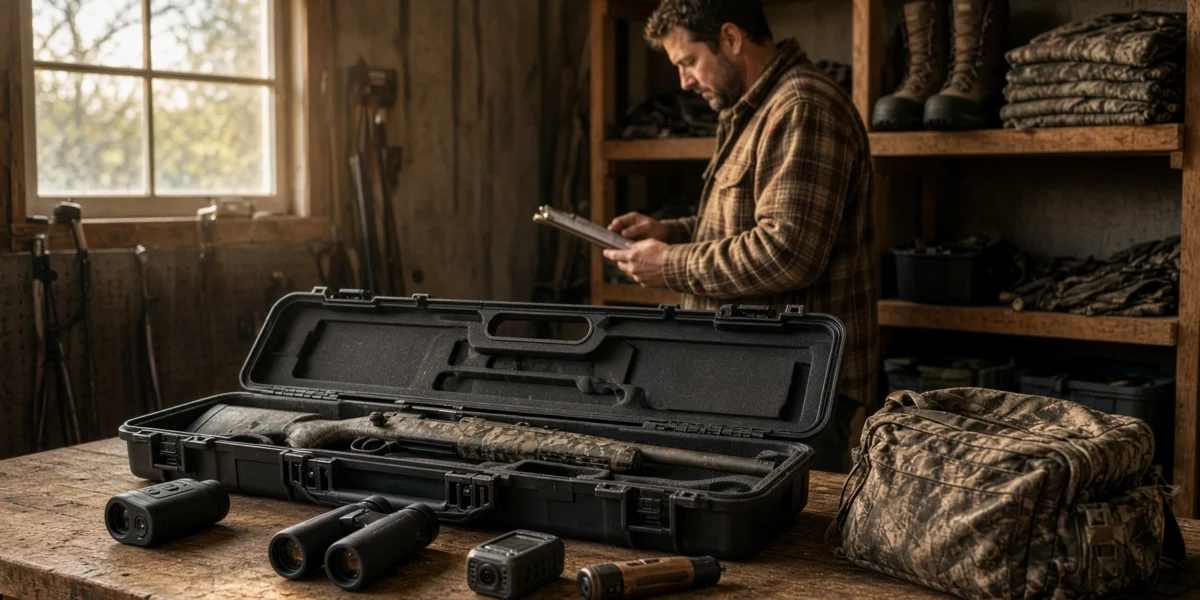
Binoculars, spotting scopes, rangefinders, trail cameras — these are expensive, they get beat up in the field, and they’re easy to lose track of when they’re not attached to a firearm.
For each optic:
- Purchase date and price (you’ll want this for insurance and eventual resale)
- Battery type and when you last replaced it
- Any damage, fogging, or reticle issues noted
- Where it lives — truck, pack, blind bag, base camp
Trail cameras deserve their own note. If you’re running more than a handful, a simple log of which camera is on which property, what SD card size is in it, and when you last checked it will save you hours of confusion mid-season.
Clothing and Footwear
This is the category most hunters under-document, and it’s the one that fails them at 4 a.m. on a cold morning.
You don’t need to inventory every sock. But your primary layering system, rain gear, and boots are worth a quick entry — purchase date, condition, and what temperatures you’ve found them reliable at. Boots especially: track when you had them resoled, when waterproofing was last applied, and whether they’re still holding up to the terrain on your lease. A $400 pair of boots that needs to be replaced mid-season is a much worse problem than knowing in July that they’re on their last year.
Calls, Accessories, and Everything Else
Grunt tubes, doe bleats, predator calls, electronic callers, release aids, rangefinders, knives, headlamps — the small stuff that lives in the blind bag and the door pockets of the truck.
A quick photo and note on each item is enough. You’re not trying to write a novel about your grunt tube. You’re trying to know you have it, where it is, and whether it’s functional before you’re standing in the dark at the trailhead.
In-Season: Field Notes That Actually Get Used
Most gear tracking advice assumes you’ll sit down and carefully catalog everything when you get home from the hunt. That is not how hunting works. You get home at noon, you’re processing a deer or cleaning a rifle or collapsing onto the couch, and whatever happened to your gear in the field stays in the field — mentally, at least.
The solution is not more discipline. It’s less friction.
Keep In-Field Tracking Simple
The only things worth noting in the field are things you’ll actually forget or that require action:
- Gear failures — anything that broke, malfunctioned, or underperformed. Don’t let this live only in your memory.
- Consumables burned — ammunition used (and what performed well at what range), batteries replaced, calls that got damaged
- Gear you lent out — to your hunting partner, your kid, your brother-in-law who borrows things and returns them three seasons later
A single note in your phone after each outing is enough. You’re not writing a field report. You’re building a record you can act on later.
Track What Performed and What Didn’t
This is the optimization piece that most hunters skip entirely, and it’s where an inventory system starts earning real returns.
Did your rangefinder fog up in the rain? Did that new broadhead fly differently than the practice point? Did your boots lose waterproofing by mid-November? Note it. Not for sentimentality — because when you’re making gear decisions next spring, you’ll have actual experience to work from instead of trying to remember how something performed a year ago.
Post-Season: The Breakdown That Sets Up Next Year
Post-season is when most hunters do three things: put everything away, vow to be more organized next year, and then put everything away in approximately the same chaos as before. The inventory mindset breaks that cycle — but only if the post-season process is defined and actually followed.
Clean, Assess, Record
Before anything goes into long-term storage, it gets assessed:
- Firearms: cleaned, inspected, and documented with any issues noted. If a rifle needs service before next season, write it down now — don’t trust yourself to remember in eight months.
- Optics: wiped down, caps on, battery check. Note any fogging or reticle drift you noticed in the field.
- Boots and clothing: cleaned per manufacturer specs, inspected for damage, and stored properly. If a boot seam is starting to separate or a jacket’s DWR finish is shot, note it while it’s fresh.
- Trail cameras: pulled and logged — how many images, what batteries looked like at retrieval, any physical damage from weather or animals
- Consumables: note what you’re low on — broadheads, calls, batteries, specific ammunition loads. This is your next-season shopping list, built on actual usage, not guesswork.
Condition Ratings Keep It Honest
A simple condition scale — Excellent, Good, Fair, Needs Service — applied to your primary gear items gives you an honest snapshot of what you’re working with heading into the off-season. It also protects you from the optimism that turns “it’ll probably be fine” into a field failure. If something is rated Fair, it either gets addressed or gets replaced before it becomes a problem at the worst possible time.
Valuation: Know What Your Collection Is Worth
Post-season is a natural moment to take stock of what you have and what it represents financially. Hunting gear — quality optics, premium rifles, well-built archery setups — holds value in a way that’s easy to underestimate until you’re trying to sell or claim a loss.
For insurance purposes alone, it’s worth keeping purchase price, current estimated value, and photos of your primary equipment. A scope that cost $800 three years ago may have appreciated. A rifle you’ve customized is worth more than its stock configuration. If you don’t document it, an insurance adjuster or an estate attorney will have no way to recover that value for you.
The System That Ties It Together
A spreadsheet can hold some of this. A notes app can hold fragments of it. What neither handles well is the connection between categories — the way your lease prep involves firearms, optics, clothing, stands, calls, and trail cameras all at once, and the way a pre-season audit should trigger maintenance reminders, not just static records.
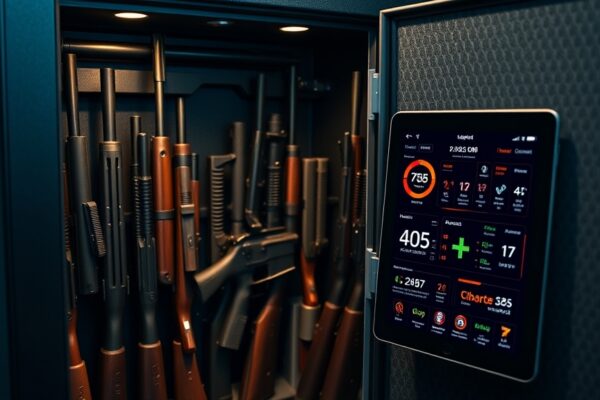
That’s the problem ZeroMyGear was built to solve. One catalog for your entire hunting setup — every firearm, every optic, every piece of gear you’ve got — with maintenance tracking, condition records, photo documentation, and the AI-assisted insight to tell you what needs attention before you’re in the field wishing you’d caught it earlier. Not a firearms-only app, not a spreadsheet you’ll abandon by February. A system built for the gear owner who takes the whole thing seriously.
If your current approach is “I’ll figure it out before the season starts,” you already know how that ends. It ends in a garage at 9 p.m. in late August, holding a rangefinder you’re pretty sure has a dead CR2 battery, wondering where you put the spares.
There’s a better way to run this. See how ZeroMyGear organizes a complete hunting setup →